
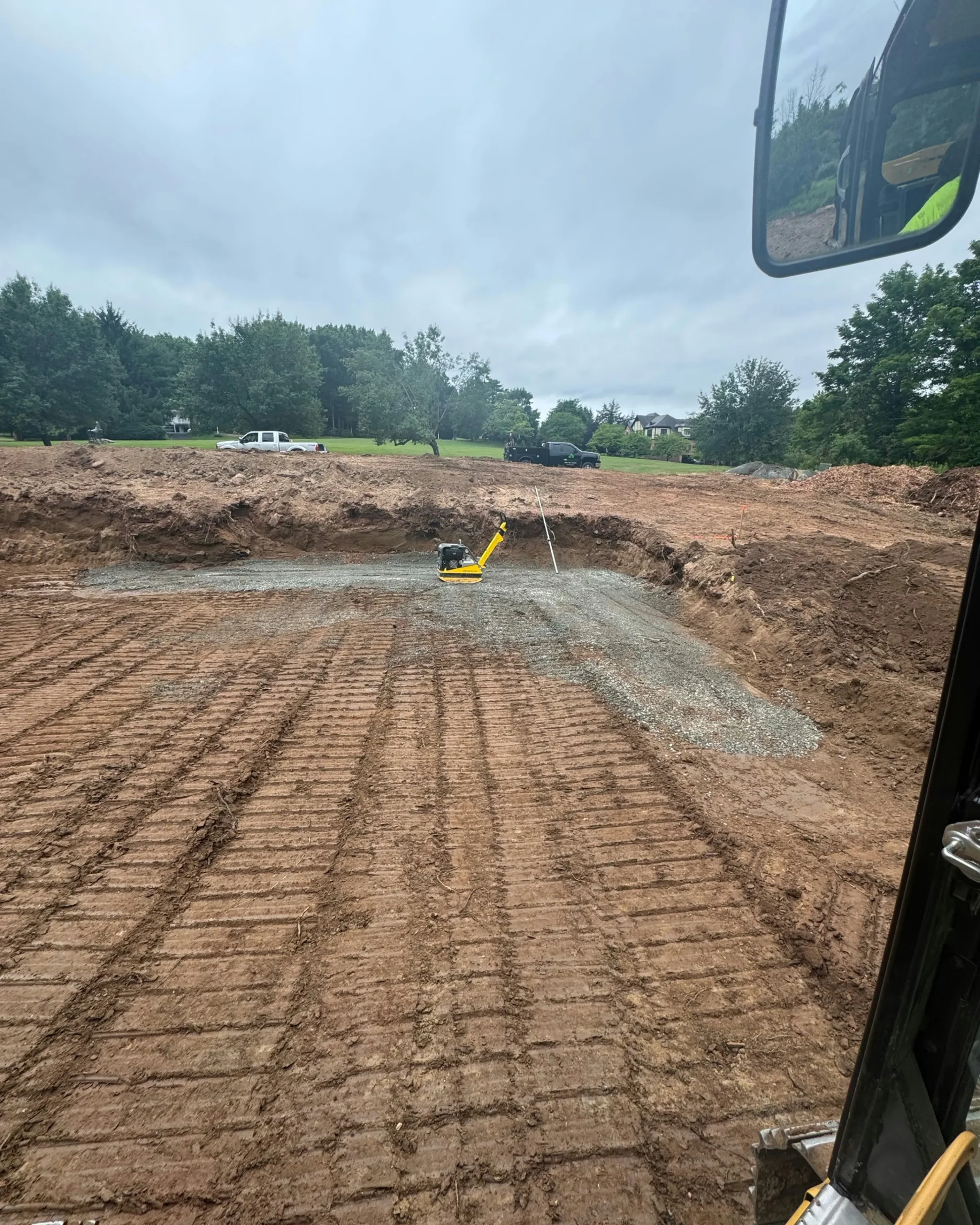
Labor & Project Management Expenses
Labor represents one of the largest line items in any site development budget, often accounting for thirty to forty percent of total project costs. In Connecticut, skilled excavation operators command hourly rates ranging from sixty-five to ninety dollars per hour, while general laborers typically bill between forty-five and sixty dollars hourly. A typical crew for grading and excavation phases might include an equipment operator, a foreman, and two to three laborers, bringing daily crew costs to approximately two thousand to three thousand dollars before equipment charges.
Several factors drive labor cost variability in the East Windsor region. Seasonal demand peaks between April and October when ground conditions permit optimal excavation and compaction. During these months, securing experienced crews becomes more competitive, and rates may increase by ten to fifteen percent. Conversely, winter availability may offer cost advantages, though weather-related delays can offset savings. Regulatory compliance adds another dimension: Connecticut’s stringent safety and environmental standards require crews trained in erosion control, traffic management, and stormwater protocols, which commands premium rates but prevents costly violations.
Consider a typical two-acre commercial pad preparation requiring three weeks of active site work. Labor costs alone might range from thirty thousand to fifty thousand dollars, depending on crew composition and site complexity. Proper project management during this phase determines whether schedules hold and budgets remain intact. Experienced site supervisors anticipate ground condition challenges, coordinate subcontractors efficiently, and minimize downtime between phases. This level of oversight directly affects your bottom line, making contractor selection as important as the bid price itself.
Machinery & Fleet Requirements
Equipment costs form the second major expense category, with choices between rental and ownership models significantly affecting project economics. Standard excavators in the twenty-ton class rent for approximately eight hundred to twelve hundred dollars daily in the Connecticut market, while larger machines command fifteen hundred to two thousand dollars per day. Motor graders, essential for finish work and drainage shaping, typically rent for nine hundred to thirteen hundred dollars daily. A comprehensive site development project might require simultaneous deployment of an excavator, dozer, compactor, and grader for two to four weeks, generating equipment costs between twenty-five thousand and sixty thousand dollars.
Project scope and duration dictate the rental-versus-ownership calculation. For developers managing multiple projects annually, fleet ownership may prove economical despite maintenance, storage, and depreciation costs. Single-project developers typically find rental more cost-effective, particularly when working with contractors who maintain their own fleet and absorb utilization risk. Connecticut’s rental market remains competitive, with equipment generally available except during peak construction season when advance booking becomes necessary.
Specialized equipment adds cost premiums but proves indispensable for certain tasks. Jack and bore equipment for underground utility installation without trenching costs significantly more than conventional excavation but eliminates surface restoration expenses. Augering equipment for drilling pier holes or utility penetrations requires specialized operators commanding premium rates. A typical two to three-acre commercial pad preparation might require standard equipment for eighteen to twenty-five days, with specialized equipment deployed for three to five days as needed. Contractors with diversified fleets and experienced operators maximize equipment productivity, completing tasks in fewer billable hours and reducing your overall expenditure.
Permitting & Compliance Costs
Permitting and regulatory compliance costs often surprise developers unfamiliar with Connecticut’s comprehensive approval framework. Municipal site plan approvals in East Windsor and surrounding towns typically require engineering stamps, environmental assessments, and stormwater management plans before breaking ground. Engineering fees for a mid-scale commercial project commonly range from fifteen thousand to thirty-five thousand dollars, depending on site complexity and required revisions. Permit fees themselves vary by municipality but generally fall between five thousand and fifteen thousand dollars for projects disturbing more than one acre.
Connecticut’s stormwater regulations prove particularly consequential. Projects disturbing more than one acre must obtain a General Permit for the Discharge of Stormwater Associated with Construction Activity, requiring detailed erosion and sediment control plans. Compliance costs include engineering design, installation of erosion control measures (silt fencing, inlet protection, stabilized construction entrances), and periodic inspections throughout construction. Budget eight thousand to twenty thousand dollars for erosion control materials and installation on a typical two to three-acre site.
Timing represents the hidden cost multiplier. Permit review periods in Connecticut municipalities range from six to twelve weeks for straightforward applications, extending to six months or more for complex sites requiring wetlands review or zoning variances. Each week of delay adds carrying costs, interest expenses, and potential seasonal construction limitations. Experienced contractors maintain relationships with municipal officials, understand local review processes, and submit complete applications that minimize back-and-forth revisions. This expertise compresses approval timelines and prevents budget-draining delays. Additionally, contractors familiar with inspection protocols ensure work passes review on the first attempt, avoiding costly corrective measures and schedule disruptions that cascade through subsequent construction phases.
Material & Aggregate Costs
Material costs fluctuate based on type, quantity, source location, and transportation distance, making accurate estimation essential for budget control. Fill material represents the foundation of site preparation, with costs varying dramatically by quality and source. Common fill suitable for building pads costs twelve to eighteen dollars per cubic yard delivered and spread in Connecticut, while engineered fill meeting specific compaction and gradation requirements commands twenty to thirty dollars per cubic yard. A typical commercial pad requiring eight thousand cubic yards of imported fill generates material costs between ninety-six thousand and two hundred forty thousand dollars depending on specifications.
Connecticut’s glacial soil conditions frequently necessitate material import. Native soils often contain excessive clay or organic content unsuitable for structural support, requiring removal and replacement with proper fill. Stone dust and crushed gravel for base courses cost eighteen to twenty-eight dollars per cubic yard delivered. Concrete for foundations, curbing, and site improvements bills by cubic yard, currently ranging from one hundred thirty to one hundred seventy dollars per yard in the Hartford County region, with minimum delivery charges applying to smaller pours.
Seasonal availability affects pricing. Spring demand peaks as projects mobilize after winter, potentially increasing material costs by ten to fifteen percent. Summer typically offers stable pricing and reliable supply. Material testing and certification add five to ten thousand dollars for a typical project, covering compaction tests, soil bearing capacity analysis, and aggregate gradation verification required by engineers and inspectors. Debris removal represents the inverse cost: demolition waste, unsuitable excavated material, and vegetation clearing generate disposal fees of twenty-five to forty dollars per ton at regional facilities. Proper material planning during design prevents over-ordering, minimizes waste, and ensures specifications match actual site conditions, directly controlling one of your largest cost variables.
Drainage & Underground Infrastructure
Drainage and underground infrastructure constitute critical cost centers that developers frequently underestimate during initial budgeting. Stormwater management systems designed to handle Connecticut’s average annual rainfall of forty-five to fifty inches require substantial investment. Catch basins cost eight hundred to fifteen hundred dollars each installed, while drainage pipe runs forty to seventy dollars per linear foot depending on diameter and depth. A comprehensive system for a two-acre commercial site might require six to ten catch basins, three hundred to five hundred linear feet of main drainage pipe, and connection to municipal storm systems, generating costs between thirty thousand and sixty thousand dollars.
Subsurface drainage prevents foundation issues and pavement failure. French drains along building perimeters cost twenty-five to forty dollars per linear foot installed. Site-wide underdrains beneath paved areas add eight to fifteen dollars per square foot to pavement costs but prove essential in Connecticut’s clay-heavy soils prone to frost heave and saturation. Utility coordination adds complexity and cost: gas, water, electric, and telecommunications must be located, protected, or relocated during excavation. Utility locate services cost five hundred to two thousand dollars depending on site size, while unexpected utility conflicts can add ten thousand to fifty thousand dollars in engineering redesign and reconstruction.
Connecticut’s stringent water quality regulations require detention or retention basins sized to manage post-development runoff rates matching pre-development conditions. Basin construction costs fifteen to thirty dollars per cubic foot of storage volume, with typical commercial sites requiring two thousand to five thousand cubic feet of detention capacity. Improper drainage design generates exponentially higher costs through foundation settlement, pavement failure, and regulatory violations requiring complete system reconstruction. Experienced site contractors engineer drainage systems correctly from the start, coordinate utility conflicts before excavation begins, and install systems that pass inspection on the first review. If you are planning a development project, consult with qualified professionals who can provide detailed drainage assessments and accurate cost projections during your planning phase. Proper investment in this infrastructure protects your building investment for decades and prevents costly remediation that can exceed original construction budgets.